Anna Zemánková
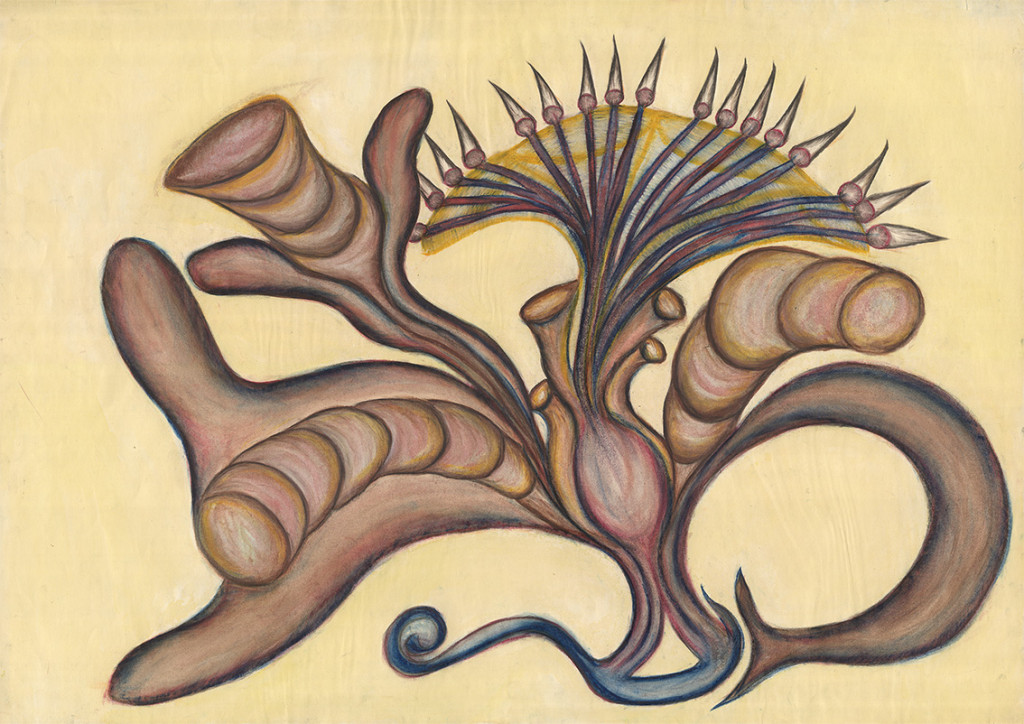
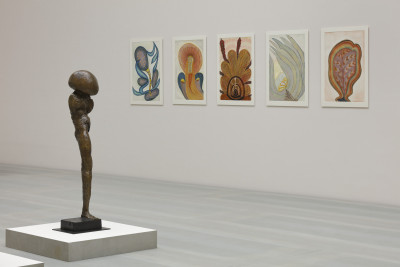
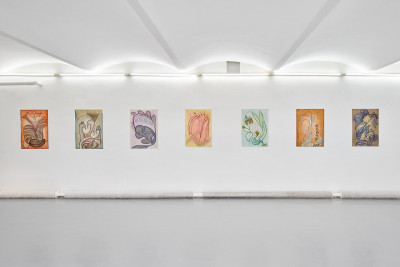
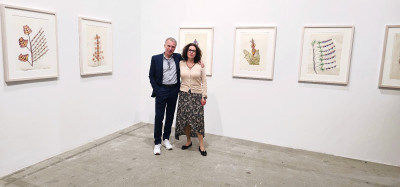
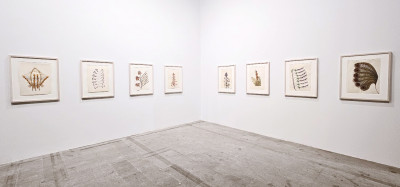
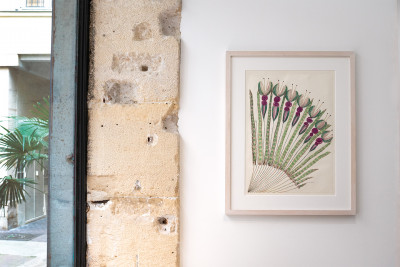
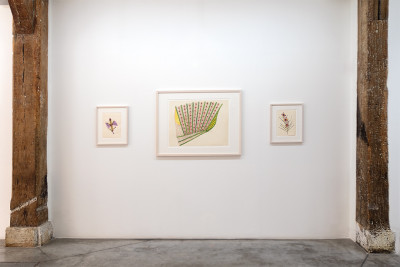
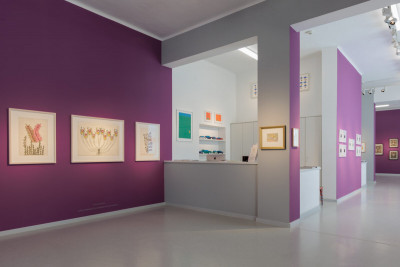
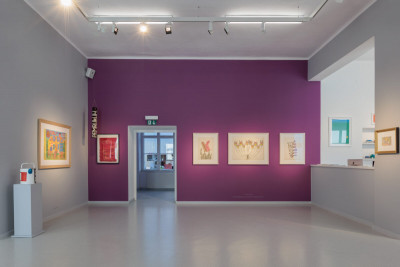
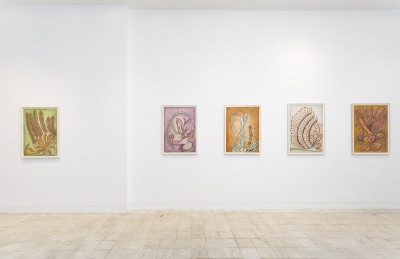
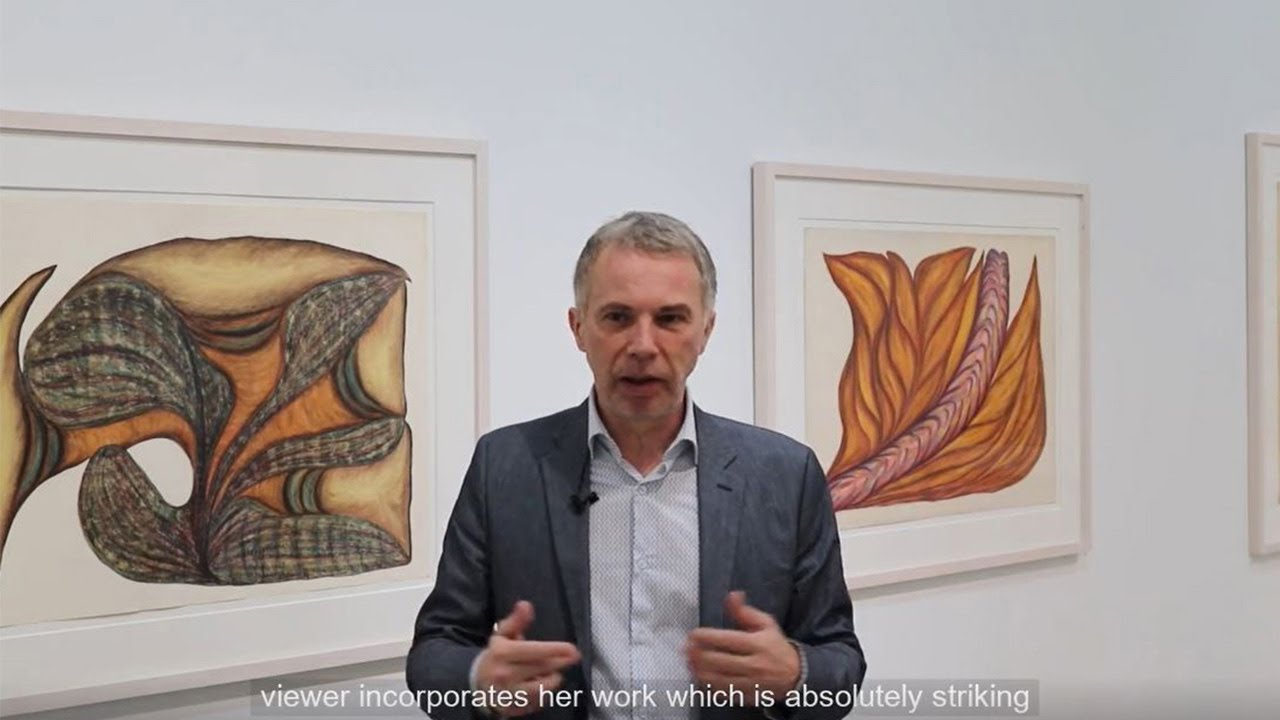
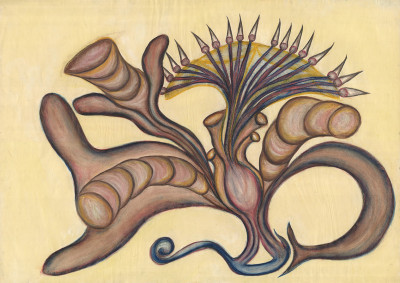
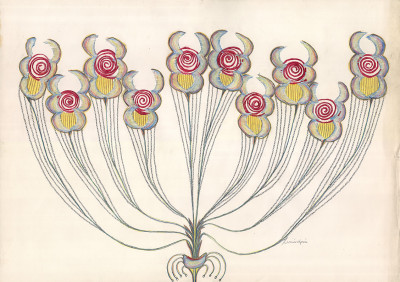
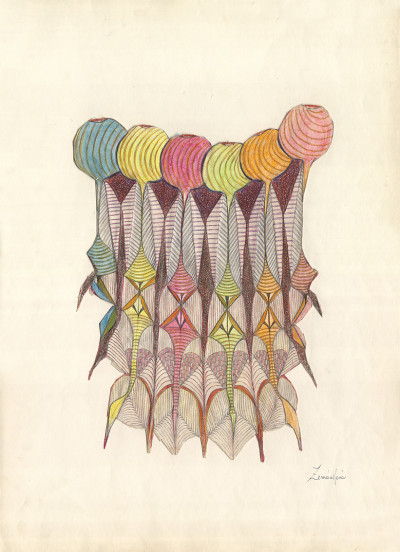
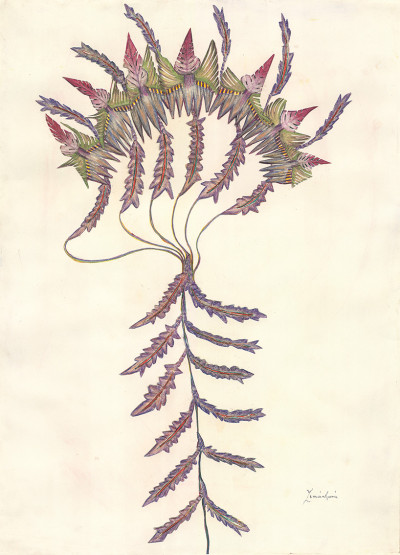
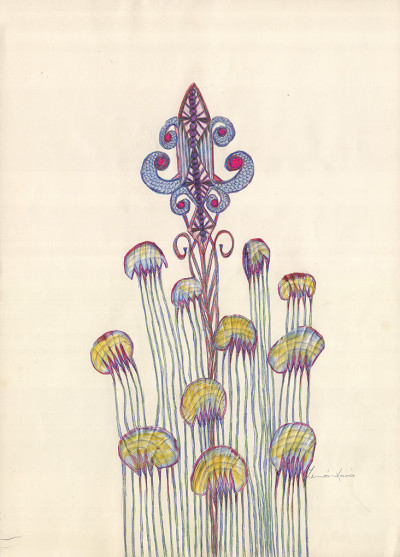
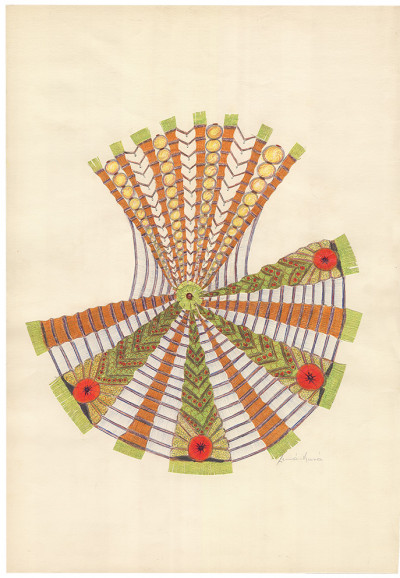
It was at the beginning of the 1960s that this humble Moravian woman began creating works, strikingly responding to impulses from the depths. At dawn, she would mentally gather flowers “that grow nowhere else,” making them emerge from the paper.
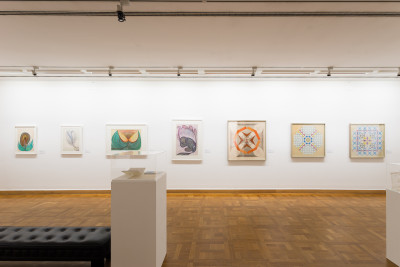
Anna Zemánková is an established figure of outsider art, to the point that she was honored in 2013 at the Venice Biennale before a significant collection of her works joined the collections of the Centre Pompidou, the Boston Museum of Fine Arts, and the Mumok.
In 2023, the gallery presented her in a solo show at Art Basel Paris, and the following year Adriano Pedrosa, curator of the Venice Biennale, exhibited a group of her works. In 2026, the Hermès Corporate Foundation in Brussels subsequently presented eight of her drawings.
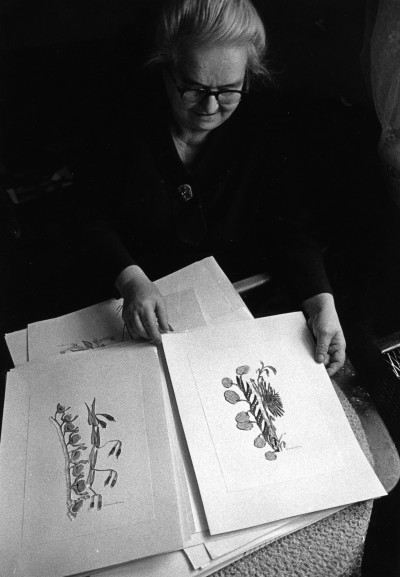
Born in 1908 in Olomouc, Moravia, Anna showed a keen interest in drawing from an early age, but her father did not understand her: she became a dental assistant.
In 1933, she married an officer, stopped working, and devoted herself fully to her home. The couple had three sons—the first of whom died at the age of 4—and, later, a daughter. Her role as a loving mother keeps her fully occupied. After the Second World War, the family moved to Prague, in 1950, after which, Anna fell into depression and, because of her diabetes, had both her legs amputated. At over 50—perhaps rekindling her childhood dream—Anna began to produce daily spontaneous drawings of vegetal inspiration between 4 am and 7 am, a moment she feels she captures magnetic forces.
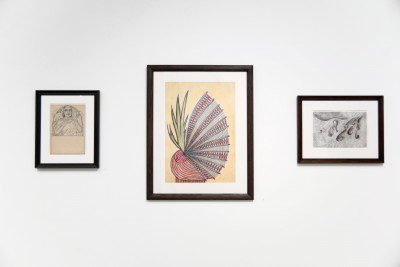
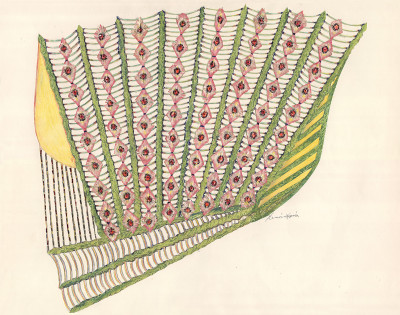
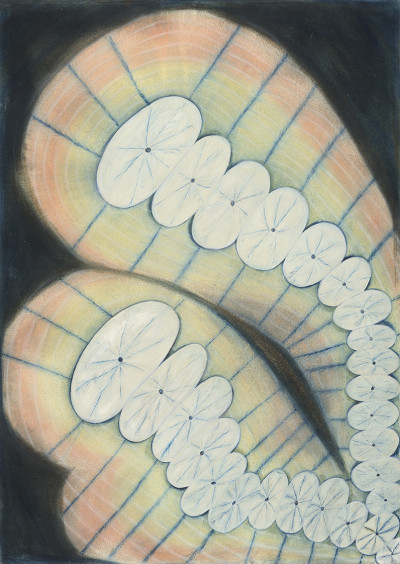
At the beginning of the artwork, she is unaware of its final form: “Everything works by itself,” “[…] no need to think.” This vegetation without roots or humus, these blooms sometimes mental, sometimes organic, from which abyssal herbarium do they spring forth? To which realm do they belong? Yet, akin to the works of Séraphine de Senlis, are they still flowers? Are they not already fruits? Fleshy with the haunting juices, gorged with the impulse of a woman who, giving herself over to an unresolved mystery, simply says, “I live.”
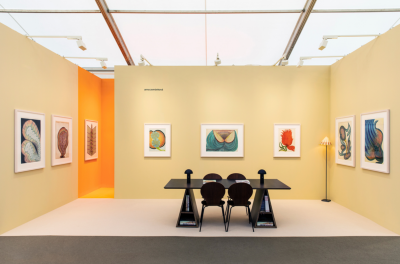
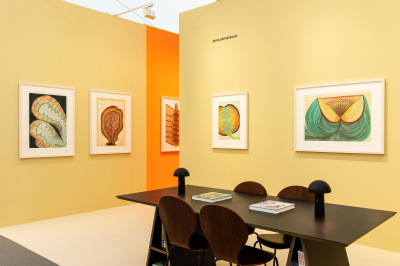
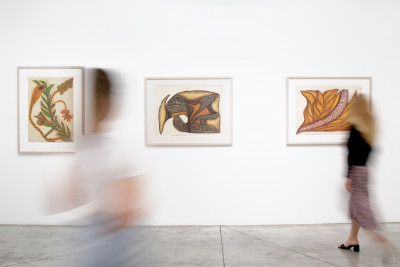
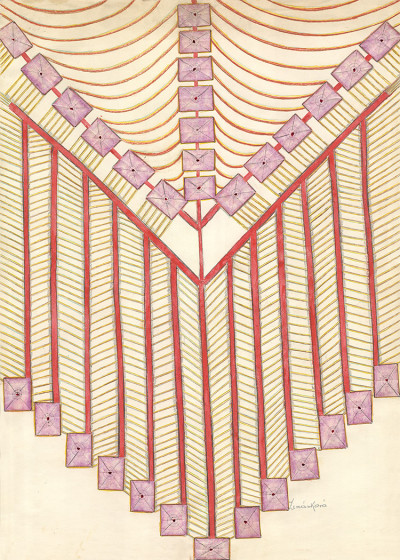
These strikingly detailed works, driven by a singular rhythm of spirals, arabesques, and geometric shapes, have made Anna a major figure in the art brut movement. Her work is represented in the most prestigious collections, culminating in the international pavilion at the 2013 Venice Biennale.
Texts : Terezie Zemánková and Manuel Anceau
Foreword : Christian Berst
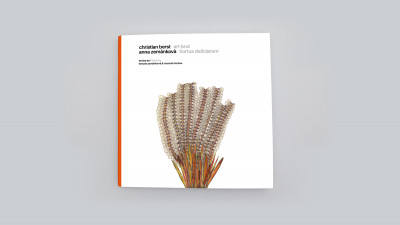
Catalog published to mark the exhibition Anna Zemánková : hortus deliciarum #2, from June, 17 to July 18, 2021.
OUT OF STOCK